WELCOME!

The Dutch East Indies is a wonderful choice for a vacation as it has a diversity never seen before in any other countries. By combining the traditional roots of since even before Prince Jayakiwarta time’s with the modern changes brought by the Dutch, the East Indies is the perfect travel destination for anyone interested in an enriching as well as a comfortable and luxurious holiday.

Sunday, September 26, 2010

Happy Happy Travel Agency

--About us

Happy Happy Agency is a travel agency founded in 1800.
Up till 1899, 4509000 European people have traveled to Southeast Asia through our Happy Happy Agency. We provide our customers with the best service and the greatest fun by various colorful activities. We introduce the local traditions and culture as well as the modernity of the country.
Choose our Agency, we will bring you the greatest happiness!
What are you waiting for?

Sunday, September 19, 2010

Dutch East Indies


Dutch East Indies


Dutch East Indies


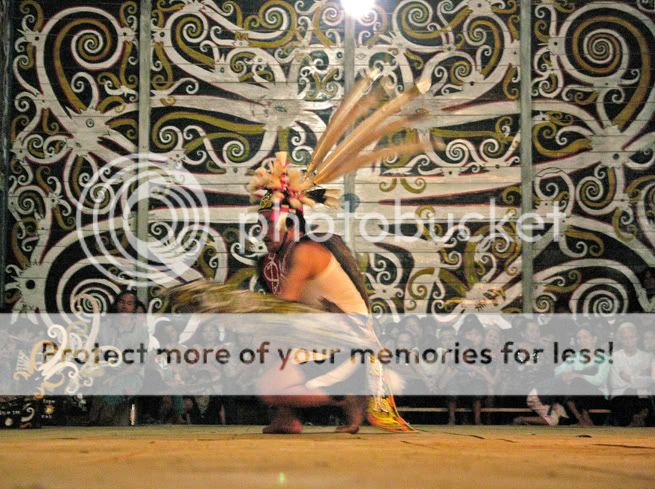
cultural attractions


Culture
“Despite the influences of foreign culture, some remote Indonesian regions still preserve uniquely indigenous culture. Indigenous ethnic groups of Mentawai, Asmat, Dani, Dayak, Toraja and many others are still practising their ethnic rituals, customs and wearing traditional clothes.”


Food

Due to the geographical position, the people living in Dutch East Indies normally eat rice, fish as the main dish. However, the food is cooked in a unique way.

Most food in the Dutch East Indies is very spicy.

Some typical traditional food includes Base Gede(Basic Spice Paste), BAWANG GORENG(Fried Shallots) etc.
Cannot wait to try the traditional food? Join us in the special "Try Dutch East Indies food" trip! attractive prize will be awarded to the person who can eat the most spicy food!


Kroncong
Kroncong is the musical genre where guitars and ukuleles are the main instruments. Kroncong was first introduced by Portuguese traders in the fifteenth century and developed independently to fit the local culture in the following centuries.
It is one of the oldest musical genre in the history.
Kroncong has become one of the traditional musical genre and it’s one of the continuity of the Dutch East Indies.
A local musician will be teaching the tourist how to play some of the instrument!
What Are You Waiting For?


Costume
The Dutch East Indies has a long history of fine clothes production. This has not been changed despite the colonialism of western countries. The textiles of clothes as well as the complex resist-dyed techniques (songket and iket) give rise to the unique features of the costumes.
The traditional way of dressing can be commonly seen especially in the rural areas.
This can be considered as continuity since the style of costumes in the Dutch East Indies did not change a lot after the colonialism.
“For both men and women, traditional dress in Indonesia includes a wrap-around lower-body cover—a kain (a rectangular length of fabric, generally in batik) or a sarong (a length of fabric with ends sewn together, more often in ikat).”

Want to try on the costumes? Only 15 dollars, choose your costume, our cameron will catch this most beautiful moment!
special price for couples!


Sculpture - carved wooden Torajan art
The flourished art during the tenth century brought along various famous works of art including sculpture. The religion also contributed to the boom of art in the Dutch East Indies in its golden age.
Many works survived under time and war shows the continuity in art in the Dutch East Indies.
The relief sculpture showing the life of Buddha at the temple of Borobudur in central Java best illustrates the history of art.


Kenyah painting
Kenyah painting is an indigenous form of visual art expresses mainly nature scenes, tropical plants, animals and human figures. Some mural Kenyah painting can be found at the Kenyah Dayak Longhouse.


Traditional theater-performed puppet shows – Wayang Kulit
The use of shadow puppet carefully chiseled to perform a story is very popular in the Dutch East Indies. It is a unique form of theatre employing light and shadow.
The Wayang Kulit is one of the most traditional arts that has not been shaped by colonialism. It shows the continuity of the Dutch East Indies culture.


Balinese painting
Balinese painting is one of the traditional visual arts originated from Hindu-Javanese. It became popular after its spread from Majapahit Kingdom to East Bali in the 13th century. The village of Kamasan, Klungkung (East Bali), was the centre of classical Balinese art.
The motifs of Balinese painting ranges from the nature scenes to human figures like dancers. It is one aspect of continuity after the colonialism in the 20th century.

Dance
Due to the influence of China, India as well as different ethnical groups and religion in the Dutch East Indies, the traditional dance comprises different elements.
The dance is divided into different eras with their own unique characteristics.
Each era reserves its own features. Continuity in performing art can also be seen through the dance.
For example, the Prehistoric Era, the Hindu/Buddhist Era and the Islamic Era are three main eras with different features.
http://en.wikipedia.org/wiki/File:Shinta.jpg


Religion
Although the religion in Dutch East Indies is a complex including Islam, Christianity, Hinduism and Buddhism, Islam is still the main religion that spread widely. Christianity was introduced formally into Dutch East Indies due to the colonialism of the European countries while Islam is a religion that started and spread across the South East Asia since 13th century.
The continuity of the Dutch East Indies can be seen from the aspect of religion.


Sunday, September 12, 2010

economic continuity


Economy
The European power used the “Cultivation system” to developed agriculture in Dutch East Indies, which was then abandoned in 1863. Change has brought wealth to some central cities in Dutch East Indies such as Balikpapan city.
However, most of the remote areas are still economically and industrially undeveloped. In spite of the change in agriculture policy, the economic structure remained unchanged. The local depend heavily on agriculture, difficult to achieve self-sufficiency. Mining and agriculture are the main source of income for the local. Hence farms can be seen everywhere within this country, reserving the beautiful scenes of the nature. Small houses made of wood and stone, lush trees, and special tropical plantations are the typical elements that make up the unique original Dutch East Indies.
picture from:
http://www.sustainabilityninja.com/wp-content/uploads/2010/01/indonesia_2.jpg

Interested in planting your own tree?
Write your wish on a piece of paper and paste it on the tree you plant, the wish will come out one day!
Now join us in the special activities "planting your wish"!

political continuity

Political
From the end of 16th to 1940s, Indonesia was under the control from the Dutch. There is nothing much to be regarded as continuity. The Dutch government kept the name of the empire that had no power and was under direct control of the Dutch Government. In the beginning of 1900s, the Dutch government adopted the “Dutch Ethical Policy”, which indeed gave the Indonesians great say in administration. The policy provided chances for the citizens to be educated, to be civilized. It is the same as those times that people could have the right to be improved. This could be regarded as continuity because to some extent the power was transferring to the central government to its people. Dutch government’s cruel control made the civilians suffered from the policies

Want to know more about the politics of the Dutch East Indies?
Our tour guide will be explaining more about the history on the way!
Participate in a short quiz, attractive prizes can be won!
Show us your intelligence!